
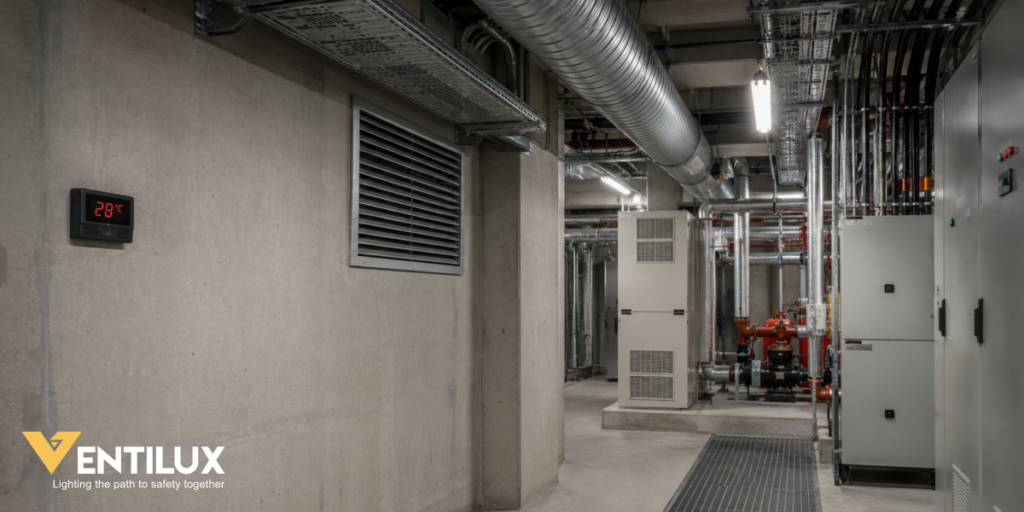
As building services spaces become increasingly congested and periods of warmer weather place greater pressure on internal environments, temperature control is an important consideration when designing, specifying and maintaining central battery systems.
Central battery systems provide emergency power to dedicated escape-route luminaires if the normal mains supply fails. Their ability to deliver the required illumination and emergency duration depends on several factors, including system design, battery capacity, maintenance and the conditions in which the batteries operate.
Battery room temperature, however, can sometimes be overlooked during the early stages of a project. A system may be correctly sized and specified, but if it is installed in a room that regularly becomes too warm, its batteries may age much faster than anticipated. This can shorten replacement cycles, increase whole-life costs and potentially affect emergency performance.
For consultants and other members of the project team, considering the battery environment from the outset can therefore make a significant difference to the reliability and long-term value of the installation.
How temperature affects battery life
Central battery systems predominantly use valve-regulated lead-acid (VRLA) batteries. These store and release energy through chemical reactions, which take place more quickly as temperatures rise. Although higher temperatures can temporarily increase available capacity, continued exposure to heat accelerates the battery’s ageing process and reduces its useful service life.
At Ventilux, we recommend an ambient operating temperature of approximately 20°C to support optimum VRLA battery performance and longevity. A widely recognised industry guideline is that every sustained 8°C increase above the recommended operating temperature can reduce battery service life by approximately 50%.
As an illustration:
| Average operating temperature | Indicative battery life* |
| 20°C | 10 years |
| 28°C | 5 years |
| 36°C | 2.5 years |
| 44°C | 1.25 years |
*Figures are indicative. Actual battery life will depend on the battery type, manufacturer’s guidance, operating conditions, charging regime and maintenance.
This relationship between temperature and service life highlights why the location and environmental conditions of a central battery system should be considered alongside its electrical performance.
A whole-life cost consideration
The cost of the batteries themselves is significant, and higher room temperatures can mean replacing them far sooner than expected. For example, batteries worth €20,000 could last around ten years when operating at 20°C. At an average temperature of 28°C, that lifespan may fall to five years, while at 36°C it could be reduced to just two and a half years.
This could mean several battery replacements within the period that would normally require only one, bringing additional costs for labour, environmental disposal and maintenance, as well as the risk of system downtime. Planning suitable ventilation, cooling and temperature monitoring from the outset can help protect battery life and avoid unnecessary costs in the future.
What are the risks of excessive temperature?
Premature battery ageing: Heat accelerates internal degradation, including plate corrosion, electrolyte deterioration, increased internal resistance and cell imbalance. These effects reduce service life and can lead to batteries requiring replacement much earlier than expected.
Reduced emergency duration: As batteries deteriorate, their ability to store and deliver energy decreases. A system may appear to operate normally during everyday conditions but may no longer achieve its intended autonomy during a mains failure.
Many central battery systems are designed to provide three hours of emergency operation, although the required duration should always be established according to the building type, fire strategy, applicable standards and project requirements.
Lower system reliability: Batteries exposed to prolonged high temperatures can become more susceptible to individual cell failure, battery-string imbalance, charging difficulties and unexpected loss of capacity.
Emergency lighting is only called upon in specific circumstances, but when it is needed, dependable performance is essential. The environment in which the batteries operate has a direct bearing on that reliability.
Greater maintenance demands: High operating temperatures may also result in more frequent inspections, battery assessments and service visits. Alongside the cost of earlier replacements, this places additional demands on facilities and maintenance teams throughout the building’s life.
Where can problems arise?
Central battery systems are frequently located in areas that accommodate other building services, including:
- Electrical switch rooms
- Generator rooms
- Plant rooms
- Service areas
- Boiler rooms
- Maintenance spaces with limited ventilation
These locations may contain equipment that generates heat continuously. Room temperatures can therefore remain above the recommended level even when external conditions are relatively mild, with the problem becoming more pronounced during warmer weather.
It is not enough to consider whether there is sufficient physical space for the central battery equipment. Consultants and project teams should also assess the likely heat load, airflow and year-round ambient temperature of the proposed location.
Coordination between the electrical and mechanical design is particularly important. If ventilation or cooling is considered only after the central battery system has been installed, the available options may be more limited and costly.
Designing for a suitable operating environment
Several practical measures can help protect battery performance and service life.
Select the location carefully: The battery environment should be reviewed at an early design stage. Where possible, avoid spaces subject to high or fluctuating temperatures or significant heat gains from neighbouring equipment.
Provide suitable ventilation or cooling: Depending on the room, heat load and battery manufacturer’s requirements, temperature control may involve natural ventilation, mechanical ventilation or a dedicated cooling system.
Any solution should be properly designed to maintain the required room conditions and comply with the relevant battery manufacturer’s guidance, including applicable ventilation requirements.
Allow adequate airflow: Battery racks and equipment should be positioned to allow suitable airflow and safe access for inspection, testing and eventual replacement. Crowding equipment into a confined space can make heat management and maintenance more difficult.
Monitor temperature: Continuous monitoring gives building operators a clearer picture of the conditions experienced by the batteries over time. Systems such as the Ventilux BACS can monitor battery and room temperatures, record trends and generate alarms when defined limits are exceeded.
This allows emerging issues to be identified before prolonged exposure causes significant degradation.
Follow manufacturer guidance: Operating temperature, ventilation, charging arrangements and maintenance requirements should all follow the recommendations of the central battery and battery manufacturers. These requirements should be reflected in the original specification and carried through into operation and maintenance information.
Protecting performance from the outset
Temperature has a direct effect on battery life, emergency duration, maintenance requirements and total cost of ownership. It should therefore be considered as part of the central battery system design, rather than treated solely as an operational issue once the installation is complete.
By reviewing room conditions early, coordinating the relevant building services and incorporating suitable ventilation, cooling and monitoring, consultants can help protect the long-term performance of the system.
Maintaining the correct environment not only extends battery life and reduces avoidable replacement costs. It also provides greater assurance that the emergency lighting system will perform as intended when it matters most.
If you are designing, specifying or reviewing a central battery system, speak to the Ventilux team. We can help you consider battery location, operating temperature, ventilation and monitoring requirements from the outset, helping to protect system performance and avoid unnecessary replacement costs.
Contact us to discuss your project > UK sales@ventilux.co.uk / Ireland sales@ventilux.ie